Understanding the Admission Exercise for International Students in Singapore
Why the Admission Exercise Matters
Moving to a new country for education is a big step. For international students aiming to study in Singapore, the process often begins with what is formally called the admission exercise for international students. This term covers the entire sequence of applications, document submissions, and placement procedures that determine whether a student can enter a local school or pre-university program. Understanding this process is crucial because Singapore's education system is highly structured and selective, especially for students coming from overseas.
Many families assume that applying is as simple as filling out a form and waiting for a reply. In reality, the admission exercise for international students involves several stages, each with its own deadlines and requirements. Missing a step or misunderstanding a rule can delay a student's entry by months. That is why it helps to break down the process into manageable parts and look at what each stage demands from both the student and the family.
First Steps: Research and Eligibility
Before any application is submitted, a student must check whether they meet the basic eligibility criteria. Singapore's Ministry of Education (MOE) sets minimum age requirements and academic standards for each level. For example, a student applying for Secondary 2 placement must have completed the equivalent of Secondary 1 in their home country and must provide transcripts that show satisfactory performance in core subjects like Mathematics, English, and Science.
It is also important to understand the difference between international schools and local government schools. International schools follow their own curricula, such as the International Baccalaureate or the British system, and their admission processes are separate. The admission exercise for international students most commonly refers to entry into the mainstream government or government-aided schools, which follow the Singapore-Cambridge curriculum leading to the GCE O-Level and A-Level examinations.
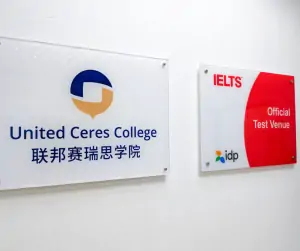
For students who need to improve their English or adjust to the Singapore curriculum, private institutions like United Ceres College offer preparatory courses. These courses are not part of the MOE admission exercise but can help students build the academic foundation they need before taking the centralised placement tests.
The Centralised Tests: AEIS and S-AEIS
The key gatekeeping mechanism for international students is the Admissions Exercise for International Students (AEIS) and its supplementary version, the S-AEIS. These are centralised tests conducted by the MOE. The AEIS takes place in September or October each year, while the S-AEIS happens in February or March. Both tests assess English and Mathematics proficiency at the level the student is applying for.
Scoring well on these tests is not just about passing. The results determine which school a student can be offered a place in. Higher scores open doors to more popular schools, while lower scores may limit options. Students who do not pass are usually not allowed to re-sit the same test in the same year; they must wait for the next intake.
One common misunderstanding is that the AEIS guarantees placement. In reality, it only qualifies a student to be considered. After the test, the MOE assigns successful candidates to schools with available vacancies, taking into account the student's test scores and residential address. This means that even a strong performance does not guarantee a spot at the student's first-choice school.
Connect with us on Facebook.
Preparing for the Tests
Preparation for the AEIS and S-AEIS should begin at least six months before the test date. English is often the biggest hurdle for international students. The test assumes a level of proficiency that allows the student to follow classroom instruction in English, write coherent paragraphs, and solve word problems in Mathematics. Many students benefit from intensive English courses that focus on academic vocabulary, reading comprehension, and basic essay writing.
Mathematics is another area where students need to adjust. The Singapore curriculum is known for its emphasis on problem-solving and heuristics. A student who is strong in arithmetic but weak in logic puzzles or multi-step word problems may struggle. Practice with past test papers and mock exams can help identify gaps.
Time management during the test is also critical. Both the English and Mathematics papers are timed, and students must pace themselves to complete all questions. For younger students, the pressure of a formal test environment can be intimidating. Building test-taking stamina through regular timed practice sessions is a good strategy.

Documents and Deadlines
The administrative side of the admission exercise is often underestimated. Students need to submit a range of documents, including academic transcripts, passport copies, proof of address in Singapore (if applicable), and a medical report. All documents must be in English or accompanied by certified translations. Missing a document can result in the application being rejected or deferred.
Deadlines are strict. For the AEIS, registration usually opens in July and closes in August. Late submissions are not accepted. Families should mark these dates on their calendars and start gathering documents well in advance. It is also wise to have a backup plan in case the application does not go through, such as enrolling in a private preparatory program while waiting for the next intake.
After the Test: What Happens Next
Once the test is over and results are released, successful candidates receive a school placement offer. They must accept the offer within a specified period, usually a few days, and then proceed to apply for a Student Pass through the Immigration and Checkpoints Authority (ICA). The Student Pass application requires proof of admission, financial ability to support tuition and living expenses, and a valid passport.
Students who are not placed in a school have the option to try again in the next S-AEIS or AEIS cycle. Some families choose to enroll their child in a private preparatory course in the meantime, so that the student keeps studying and does not lose momentum. This is where institutions offering AEIS and S-AEIS preparation can be very helpful.
Common Challenges and How to Overcome Them
International students often face cultural and linguistic adjustment issues beyond just the academic test. Simple things like understanding the local accent, adapting to the faster pace of instruction, and making friends in a new environment can be stressful. Parents should look for schools and programs that provide orientation and pastoral care.
Another challenge is the cost. Tuition fees for international students in Singapore are higher than for local students, and living expenses add up quickly. Families need to budget carefully and explore scholarship options if available. Some private institutions offer installment payment plans, which can ease the financial burden.
Practical Tips for a Smooth Process
- Start the application process at least eight months before the desired intake date. This allows time for test preparation, document gathering, and handling unexpected delays.
- Take a diagnostic test early to gauge the student's current level. This helps in choosing the right preparatory course and focusing on weak areas.
- Keep copies of all submitted documents and maintain a checklist. Digital backups are useful in case originals are lost.
- Stay in touch with the school or institution handling the application. They can provide updates on deadlines and changes in policy.
Final Thoughts
The admission exercise for international students is a rigorous but fair system. It ensures that students entering Singapore's schools have the necessary academic foundation and language skills to succeed. While the process can feel overwhelming at first, breaking it down into steps and preparing systematically makes it manageable.
For families who are new to Singapore, working with an experienced education provider can make a significant difference. United Ceres College, located at 37 Middle Rd, #05-00, Singapore 188946, can be reached at +65 8699 3609 and offers a range of programs including AEIS and S-AEIS preparation, English language courses, and diploma programs in Business and Applied AI. Their team understands the challenges international students face and provides structured support throughout the admission journey.